Independent research and applied systems

Research that turns into working systems.

Trinity Research is Freddie Hunt and Joshua Hunt, PhD. We work on language model internals and optimization, business process automation, predictive modeling, and the data ingestion that sits underneath all of it. This page describes what we build and how. The research dossier documents one project in full, including the parts that did not work.

An abstract animated field of drifting points, used as a decorative visual.
Decorative generated visualization. It represents no client data and no production system.

Capabilities

What we work on.

Language model research & optimization

We study how language models behave internally, not only how they score. That covers training analysis, interpretability tooling, and practical optimization of the models already in use — prompt and context structure, inference cost, latency, and knowing which of those is actually the constraint.

Business process automation

Most organizations already pay for Power Automate and the wider Power Platform and use a small fraction of it. What they usually need is not a complicated build: receipts captured and filed without anyone retyping them, expense reports that assemble themselves, email campaigns that go out on schedule. Small automations, done properly, are where the hours come back.

Predictive modeling

We build and continuously refit models for market and outcome prediction, including sports markets. Most of the work is in the pipeline rather than the model: data collection, feature construction, backtesting discipline, and evaluation that is honest about variance.

Data ingestion & systems design

Forms, spreadsheets, and manual collection are where most organizational data stalls. We design the path from capture to something downstream can use: validation, normalization, storage, and the automation that keeps it current without anyone remembering to run it.

Selected work

What we have built.

Four projects that between them cover the range: a client platform, a research program, a modeling practice, and the everyday automation work.

Client platform

Real estate site with an automated back end

A live agent site for Catherine C. Hunt of LaState Realty LLC, covering eight parishes in Northwest Louisiana: MLS-backed home search, neighborhood guides, a live market-data dashboard, and valuation requests. Behind it runs the part visitors do not see — scheduled ingestion of listing and market data, automated research that produces buyer and investor recommendations, a generated email newsletter, and daily social posts drawn from the same pipeline. The research output and its distribution are one system rather than two.

Research program

Project SLSSM-01

A stable linear spectral state-space language model, trained and analyzed so that its internal dynamics could be tracked across checkpoints rather than summarized by a loss curve. The public dossier gives the evidence, the metric definitions, the disclosure boundary, and the limitation the analysis exposed. The measurement method has a separate reproducible demo on public Pythia-14m checkpoints.

Modeling practice

Predictive sports models

An ongoing modeling program covering data collection, feature construction, and continuous refitting against closing markets. We are not publishing performance figures here: a track record is only worth reading with its sample size, date range, and evaluation method attached, and that belongs in a document of its own rather than a line on a homepage.

Automation builds

Receipts, expenses, and the small stuff

Power Automate and forms-to-systems work: receipt and expense capture, expense reports that build themselves, scheduled email campaigns, and replacing email-attachment shuffling with validated capture that lands somewhere structured. Individually these are small builds. They are also the ones people notice every week. These engagements are private, so they are described by shape rather than by client.
Signals

Business automation, tracked as it changes.

Short notes on Power Platform releases, Microsoft 365 changes, and applied AI tooling — what changed and whether it matters. Updated on weekdays.

Aug 6, 2026

datasette 1.0a38

datasette 1.0a38 patches a SQL injection vulnerability affecting instances that serve a mix of public and private tables from the same database using Datasette's built-in permissions system. Administrators running access-controlled multi-table instances should update immediately. Instances serving only public data, or where all tables share the same access level, are not affected.

Simon Willison
Aug 6, 2026

AI-assisted Oracle-to-PostgreSQL schema conversion in Visual Studio Code

Microsoft's PostgreSQL engineering team describes an AI-assisted schema conversion workflow in Visual Studio Code for Oracle-to-Azure Database for PostgreSQL migrations. Mapping Oracle's type system, constraints, and PL/SQL constructs to PostgreSQL equivalents is typically the most time-consuming phase before any data moves, and doing this from within the editor reduces context-switching. The article does not confirm whether the tooling is generally available or in preview, so verify before using it in a production migration plan.

Microsoft Tech Community
Aug 5, 2026

Exploring Multi-Agent Workflows with Microsoft Agent Framework

This Microsoft Foundry post describes five orchestration patterns for multi-agent systems — concurrent, sequential, group chat, handoff, and Magentic — with code examples using Azure AI Foundry's FoundryChatClient. It is an educational walkthrough of available patterns rather than a product announcement; the post does not indicate any capability is newly released. Useful as a named-pattern reference if you are designing coordination logic on Foundry and want working code alongside the taxonomy.

Microsoft Tech Community

Read all signals

How we work

We would rather show the system than describe it.

Where we can link the thing itself, we link it. Where a project belongs to a client, we describe the shape of the work and stop there. That means this page is shorter than it could be, and the parts of it that are specific are specific on purpose.

We publish limitations next to results. The research dossier on this site says plainly that its numbers are author-reported, rounded, drawn from a single run, and externally unreplicated — because a reader who has to discover that on their own has learned something worse than the caveat. The same standard applies to the applied work: there are no performance claims on this page, because a claim without its method attached is not evidence.

Who we are

Led by the Hunt brothers.

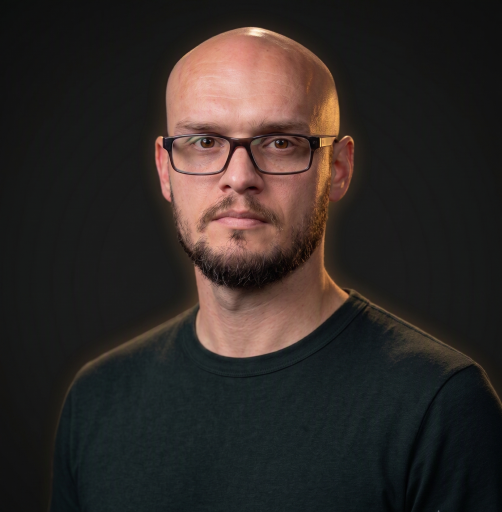
Freddie Hunt

Freddie Hunt

Founder / Lead Research Scientist

Leads model research, training analysis, and spectral diagnostics on Project SLSSM-01, and the automation, modeling, and platform work across Trinity Research's applied projects.

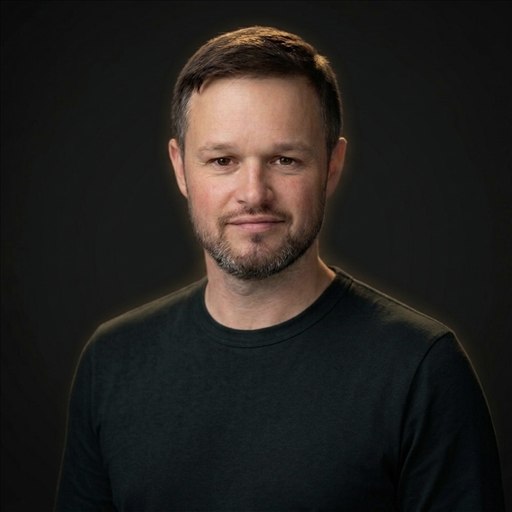
Joshua Hunt

Joshua Hunt, PhD

Research Collaborator / Academic Advisor

Research collaborator and academic partner. Affiliation listed for identification: Louisiana Tech University.

Trinity Research is an independent effort. Louisiana Tech University affiliation is provided for identification only and does not imply institutional endorsement.

Questions, corrections, or collaboration: contact@trinity-research.com